- October 5, 2026
- capitalpowertechbd
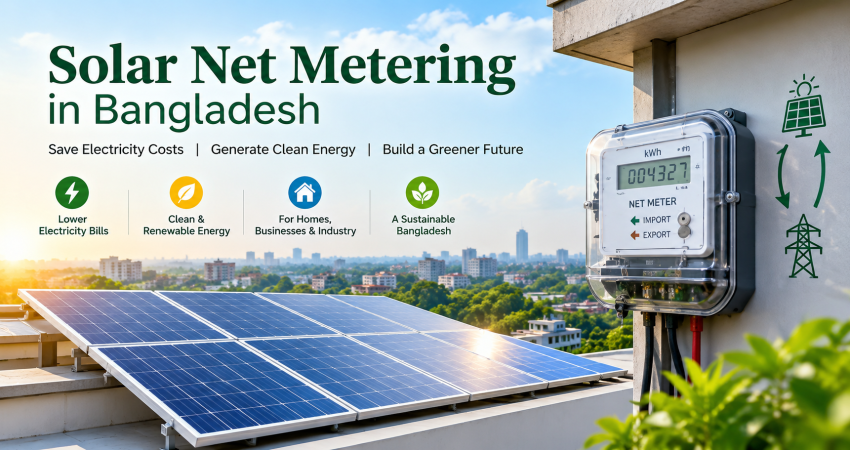
In Bangladesh, solar net metering has emerged as a useful mechanism for homes, offices, factories and other electrical users to harness rooftop solar power while staying connected to the national grid. The approach allows consumers to use the electricity they generate and send surplus electricity to the grid, potentially reducing the amount of electricity purchased from the utility.
For example, if a rooftop solar system generates 1,000 kWh in a month and the premises directly uses 700 kWh, the remaining 300 kWh can be exported to the grid under the applicable net-metering arrangement. Instead of paying for the full 1,000 kWh of consumption from the grid, the consumer can offset eligible exported electricity against imported electricity, reducing the net amount billed. The actual savings depend on system generation, daytime consumption, applicable electricity tariffs and the treatment of exported units.
Bangladesh’s current framework is based on the Net Metering Guideline 2025, making it important to understand the updated rules before installing a system. For anyone considering rooftop solar, the key question is therefore not simply how much electricity the panels generate, but how much grid electricity the system can offset and how that changes the monthly bill.
What Is Solar Net Metering In Bangladesh?
Solar Net Metering in Bangladesh works through a simple three-step process:
- 1. Solar Generation & Consumption: Solar panels generate electricity during suitable sunlight hours. Your building uses the electricity it needs first, reducing the amount of power it needs to purchase from the distribution grid.
- 2. Bi-Directional Meter: When solar generation is higher than the building’s immediate consumption, the surplus electricity flows into the distribution grid through an approved bi-directional meter. The meter records electricity flowing both into and out of the premises.
- 3. Grid Supply & Net Accounting: When solar generation is insufficient, such as at night or during periods of limited sunlight, the building can draw electricity from the grid. The meter records these imports and exports so eligible electricity can be accounted for under the applicable net-metering arrangement.
The key point is that net metering does not mean operating completely off-grid. You remain connected to your electricity distribution utility, making the system practical for businesses that need reliable power while using solar generation to reduce grid electricity purchases.
Who Can Apply For Net Metering?
Eligible users normally must be valid electricity consumers of a distribution utility and have no outstanding electricity bills when applying under the 2025 guideline. The renewable energy system must also be owned by the applicant or installed with the written consent of the owner.
Eligibility By Voltage Level
Voltage Level | Who It Covers | Key Eligibility Point |
LT | Low-voltage electricity consumers | Must have a valid utility connection and meet applicable net-metering requirements |
MT | Medium-voltage electricity consumers | Eligible subject to the applicable technical and utility requirements |
HT | High-voltage electricity consumers | Eligible subject to applicable system and connection constraints |
EHT | Extra-high-voltage electricity consumers | Eligibility depends on the applicable technical and regulatory conditions |
Solar systems can be installed in regulated areas on the customer’s premises and on suitable roofs, subject to applicable requirements. Before applying, it is useful to review the official Net Metering Guideline 2025 and confirm the rules that apply to your specific electrical connection.
How Does The Financial Benefit Work?
The basic financial logic behind Solar Net Metering in Bangladesh is straightforward, but the investment should ultimately be judged by its payback period or ROI.
Suppose your solar system costs BDT 10 lakh and reduces your electricity expenditure by an average of BDT 25,000 per month. Your simple annual savings would be BDT 3 lakh, giving an estimated simple payback period of about 3.3 years:
Payback Period = Solar System Cost ÷ Annual Savings
= BDT 10,00,000 ÷ BDT 3,00,000 ≈ 3.3 years
This is only an example, not a guaranteed Bangladesh-wide ROI. Actual results depend on system size, installation cost, solar generation, daytime electricity consumption, applicable electricity tariffs, maintenance costs, and how surplus generation is accounted for under the net-metering arrangement. Bangladesh’s 2025 framework allows consumers to use generated electricity first and export surplus electricity to the grid for applicable bill adjustment.
The strongest financial case is usually created when solar generation aligns with daytime electricity consumption. A factory, office, commercial building, or other facility operating during daylight hours may therefore achieve a different payback period from a building that consumes most of its electricity at night.
For a broader understanding of renewable-energy planning, the SREDA renewable energy resources can also provide useful government-level information.
Solar Net Metering Application Process In Bangladesh
The application process has been digitized through Bangladesh’s centralized Net Energy Metering platform. The process begins by selecting the relevant utility and submitting the consumer account information online.
Step 1: Apply
The applicant enters the necessary consumer and system information on the web portal.
Step 2: Visit To Site
The concerned utility shall validate the application and make arrangements for a physical inspection of the proposed site.
Step 3: Get the Approval
The utility will analyse the inspection report and may approve the proposed installation. The official process from inspection to approval may take up to 10 working days.
Step 4: Install The Solar System
Once permission is received, the system should be installed according to the applicable technical requirements. Approved equipment and appropriate safety standards matter because the utility evaluates the completed installation.
Explore our solar system solutions if you are comparing solar installation requirements for a commercial or industrial facility.
What Happens After Installation?
Installation is followed by a system evaluation. The utility checks whether the installation complies with the applicable guideline, including relevant technical requirements for solar modules and inverters.
The key lesson is simple: obtaining permission and installing panels are not the final steps. The completed system must pass the required evaluation before the net-metering arrangement can be finalized.
For facilities where solar will operate alongside other electrical infrastructure, understanding the wider electrical substation requirements can also help during system planning.
Is Solar Net Metering Worth It In 2026?
Bangladesh Solar Net Metering can financially make sense if the system is designed according to real electricity needs. The goal should not be to just construct the biggest solar system feasible. Instead, evaluate your electricity usage, available roof or installation area, system cost, estimated solar generation, maintenance needs and the value of electricity consumed or exported.
Quick ROI Checklist:
- Electricity Use: How much power do you consume during daylight hours?
- System Cost: What is the total installation cost, including equipment and installation?
- Solar Generation: How many kWh can the system realistically generate annually?
- Bill Savings: How much electricity cost can be avoided through self-consumption?
- Export Value: What value will surplus electricity exported to the grid provide?
- Payback: Divide total system cost by estimated annual net savings to estimate the simple payback period.
In the 2025 guideline, the AC output capacity of a net-metered system may be up to the customer’s assigned load, subject to applicable regulations. That makes proper load assessment particularly important. A technically impressive system can still be a poor investment if it is poorly matched to the facility’s consumption pattern.
Final Thoughts
Solar Net Metering in Bangladesh is an energy-management framework rather than an incentive for solar panels. The most effective decisions are those where system capacity matches genuine consumption, aligns with current utility requirements, and is based on realistic assumptions.
We urge you to review the latest government requirements and assess the proposed system from an electrical and financial perspective before you commit. Capital PowerTech can assist you with the practical needs of a solar installation and its integration into your current electrical infrastructure for professional assistance.